The End of Traditional Android Flashing Tools
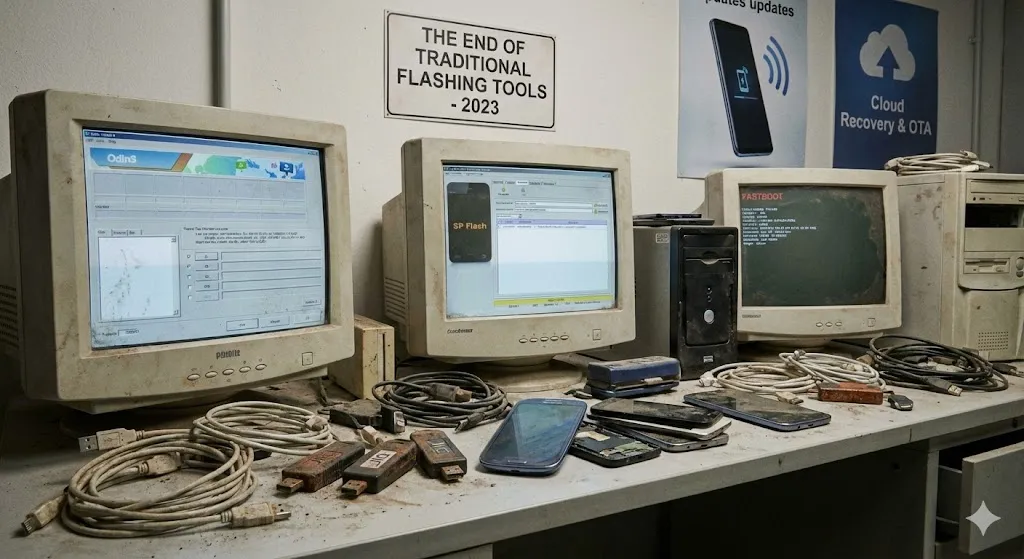
"The End of Traditional Android Flashing Tools" is not an industry consensus or a specific event, but rather reflects a gradual shift in the Android ecosystem. While brand-specific, PC-based tools like Odin (for Samsung) and SP Flash Tool (for MediaTek) remain widely used and essential for mobile repair technicians, Google is promoting more streamlined, web-based methods for AOSP development and testing, and security enhancements are making unauthorized flashing more difficult.
Continued Relevance of Traditional Tools
Traditional flashing tools are far from obsolete and are actively used because:
Brand/Chipset Specificity: Tools like Odin are the reliable, often official (though internally developed by Samsung) method for flashing Samsung devices. SP Flash Tool is crucial for MediaTek-based phones.
Unbricking Devices: These tools are often the only way to recover a "bricked" device, a task that newer, more streamlined methods may not support in all scenarios.
Advanced Operations: They allow for flashing custom recoveries, specific bootloaders, and other low-level operations not typically available through official consumer channels.
The Shift Towards Modern/Official Methods
The perceived "end" of traditional methods is due to several industry shifts:
Official Web-Based Tools: Google has introduced the Android Flash Tool (flash.android.com), a web-based tool that uses WebUSB to flash factory images and Generic System Images (GSI) onto Pixel devices and other compatible hardware. This approach simplifies the process for developers by eliminating complex command-line setup.
Enhanced Security: Android's security model, particularly Verified Boot and mandatory access controls (SELinux), makes it harder to flash unauthorized firmware or modify core partitions without unlocking the bootloader first. Bootloaders increasingly require a physical user interaction to unlock, preventing remote or automated flashing.
Hardware Authentication: Some modern devices and unbricking tools require server-side authentication (auth) to perform flashing operations, which limits the effectiveness of generic, cracked, or third-party tools.
Focus on HTML5: In web development, HTML5 has replaced Adobe Flash Player entirely, a separate but similarly named transition that often leads to confusion in search results.
Summary
Traditional, PC-based flashing tools remain a core component of the mobile repair and power-user ecosystem. However, they are increasingly complemented, and in some official development scenarios, superseded, by simpler, web-based tools and face challenges from continually evolving hardware and software security measures. The field is adapting, not ending, with new tools emerging to manage these changes (e.g., Galaxy Flasher for Linux, which manages existing command-line interfaces).
Comments (1)
No comments yet. Be the first to comment!