Apple’s New Software Lockdown and Its Impact on Repair & Unlock Services
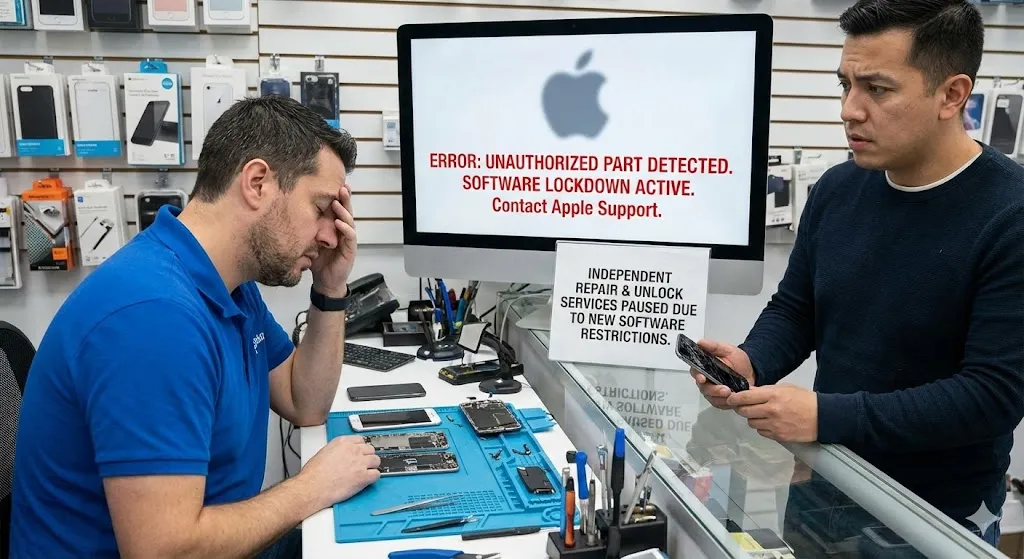
Apple has historically used software to restrict third-party repairs and device unlocking, though recent actions and legislation are forcing some changes. The current "lockdown" refers less to a new specific single software feature and more to an ongoing ecosystem that relies on parts pairing and software authentication, impacting both independent repair shops and unlock services.
Impact on Repair Services
Apple's software validates parts (screens, batteries, cameras, etc.) against the device's logic board via a cloud server. If a part is replaced without this proprietary "pairing" process, the software triggers warnings or disables certain features, impacting independent repair shops significantly.
Parts Pairing: Features like True Tone, Battery Health metrics, Face ID, and auto-brightness would often not work when a third-party or even a genuine used Apple part was installed without Apple's proprietary software calibration tools (Apple Service Toolkit 2).
Software Warnings: Devices display prominent "unknown part" or "non-genuine part" warnings in the Settings app, steering consumers toward Apple Authorized Service Providers (AASPs).
Right to Repair Changes: Due to mounting pressure and "right to repair" laws in various US states (like Oregon and Colorado), Apple announced in April 2024 (effective Fall 2024/iOS 18) that it would expand support for used genuine Apple parts and allow True Tone and battery health metrics to function on these parts. This is a significant shift, though the process still relies on Apple's system for verification and does not fully embrace non-genuine third-party parts without limitations.
Impact on Unlock Services
"Unlocking" generally refers to carrier unlocking or passcode bypassing.
Carrier Unlocking: Apple states that only the original carrier can unlock an iPhone for use with a different network. Historically, software updates have "bricked" or made inoperable iPhones that were unlocked using unauthorized, third-party software. The risk of an update breaking an unauthorized unlock remains high.
Passcode Bypassing/Data Access: Apple's encryption and secure software update process make it extremely difficult for anyone, including law enforcement or third-party services, to access data on a locked iPhone without the user's passcode or biometrics. The "Lockdown Mode" feature, while aimed at stopping sophisticated mercenary spyware, further hardens the device against unsolicited connections and configuration profiles, which can hinder some technical methods used by data recovery/unlock services.
In essence, Apple's software architecture reinforces its control over the repair and modification ecosystem, making independent services challenging to use or less effective, though recent regulatory changes are beginning to open up options for genuine used parts.
Comments (0)
No comments yet. Be the first to comment!